
Site Administration

Site Administration information

PostgreSQL has an autovacuum and however much it improves with every version it has not removed the benefit of the occasional manual vacuum. There are 3 levels of effectiveness and load; autovacuum, vacuum (like reindex), and vacuum full (like a dump/restore). We find that a full vacuum can be of little benefit even over decades, but a regular vacuum can be of benefit in as little as a year.

  • System Tools > Analytics > DB Index Fragmentation

gives an indication of if running a vacuum would be of benefit (more than 10 tables, over 30% fragmented). Noodle has a button for this and other tasks in

  • System Tools > Settings > General > Import > Maintenance

But there is no progress report etc like with the official management client for PostgreSQL (PGAdmin4): 

or by running SQL:

  • VACUUM VERBOSE ANALYZE;

We don't automate this for servers we don't manage because it can conflict with backups and usage.
In System Tools > Settings > Security there are 2 header related options:

  • Use CTO and STS headers
    • X-Content-Type-Options: nosniff
    • Strict-Transport-Security: max-age=$HSTSSeconds; includeSubDomains
      • $HSTSSeconds is set in noodle.properties (6 months default)
      • Only set if HTTPS is in use
  • Use RT, CSP, FO, XSSP headers
    • Report-To: ...1 day... /CSP.po
      • If Chrome or Edge of supporting versions
    • Content-Security-Policy: $CSP
      • $CSP varies depending on the page served
    • X-Frame-Options: SAMEORIGIN
    • Referrer-Policy: strict-origin-when-cross-origin
    • X-XSS-Protection: 1

Noodle offers Large Language Model (LLM) Artificial Intelligence (AI) integration in the editors for streamlining document creation and refinement. Information in Noodle other than what is in the current editor when AI is invoked is not made available to the AIs .Which AI is used (Google Gemini by default) and the ability to disable is in:

System Tools > Settings > General > Integrations

Links to 3rd party Application Programming Interfaces (APIs) and pricing:

Free tiers:

Paid only:

ArtificialAnalysis.ai has a nice pricing, quality, and speed overview.

Due to AI being in a growth phase models are deprecated quickly.

Undo ([ctrl]+[z]) or close can be used to revert changes made by pressing the AI button.

Wikipedia has a list. Comments on the popular options;

  • Apache - Tomcat (most popular)
  • Eclipse - Jetty (small and fast)
  • Eclipse - GlassFish (heavy)
  • Payara - Payara
  • Red Hat - WildFly / JBoss EAP

Micro services; fast start with native executables via GraalVM;

  • Red Hat - Quarkus
  • Micronaut - Micronauts

Specifications at jakarta.

Any user with access to system tools can reset the admin password with a web browser.

Any person with access to the SQL server can change the admin password to another users password

select object_id, username, password from users where username = 'admin' or username = '$ME';
update users set password = '$PASS' where object_id = '$ID';

For example

update users set password = 'P3b*cH.5fOBTJl5ELM)W' where username = 'admin';

The Business Continuity Plan for local installs is mostly up to the client and we provide a site export feature by which all data is converted to standard formats in a zip file to avoid vendor lock-in. We also have a HA option. and restoring from backups can be tested in a virtual machine.

Hosted instances have security measures in place and can be restored to any cloud or local environment. We maintain backup domains with multiple registries.

BranchVersionFirst buildLatest build
Long Term Support (LTS)7.14.102026-01-022026-02-02
Release7.14.112026-02-022026-03-26
Next7.14.122026-04-02Today

Long Term Support versions (annually)

VersionReleaseRetirement
7.14.102026-02-022027-01-02
7.13.022025-01-022026-01-02
7.12.072023-12-022025-01-02
7.11.032022-11-022024-01-02
7.08.232021-12-012023-01-02
7.08.132020-11-032022-01-02
7.08.022019-10-022021-01-02
7.05.122019-02-192020-01-02

Release versions (monthly)

VersionReleaseRetirement
7.14.112026-04-022026-05-02
7.14.102026-02-022026-04-02
7.14.092025-12-022026-02-02
7.14.082025-11-022025-12-02
7.14.072025-10-022025-11-02
7.14.062025-09-022025-10-02
7.14.052025-08-022025-09-02
7.14.042025-07-032025-08-02
7.14.032025-07-022025-07-03
7.14.012025-04-022025-05-02
7.13.042025-03-022025-04-02
7.13.032025-02-022025-03-02
7.13.022025-02-012025-02-02
7.13.012024-12-022025-01-02
7.12.172024-11-022024-12-02
7.12.162024-10-022004-11-02
7.12.152024-09-022004-10-02
7.12.142024-08-022004-09-02
7.12.132024-07-022024-08-02
7.12.122024-04-182024-07-02
7.12.112024-04-082024-04-18
7.12.102024-04-022024-04-08
7.12.092024-03-022024-04-02
7.12.082024-02-022024-03-02
7.12.072023-12-022024-01-02
7.12.062023-11-022023-12-02
7.12.052023-10-022023-11-02
7.12.042023-09-022023-10-02
7.12.032023-08-022023-09-02
7.12.022023-07-022023-08-02
7.12.012023-06-022023-07-02
7.11.072023-05-022023-06-02
7.11.062023-04-022023-05-02
7.11.052023-03-022023-04-02
7.11.042023-02-022023-03-02
7.11.032022-11-022023-02-02
7.11.022022-10-022022-11-02
7.11.012022-09-192022-10-02
7.10.012022-08-022022-09-02
7.09.042022-07-022022-08-02
7.09.032022-06-022022-07-02
7.09.022022-05-022022-06-02
7.09.012022-04-022022-05-02
7.08.262022-03-022022-04-02
7.08.252022-02-022022-03-02
7.08.242022-01-022022-02-02
7.08.222021-11-022021-12-02
7.08.212021-10-022021-11-02
7.08.202021-07-022021-10-02
7.08.192021-06-022021-07-02
7.08.182021-05-022021-06-02
7.08.172021-04-022021-05-02
7.08.162021-03-022021-04-02
7.08.152021-02-022021-03-02
7.08.142021-01-022021-02-02
7.08.122020-10-022020-11-02
7.08.112020-09-022020-10-02
7.08.102020-08-022020-09-02
7.08.092020-07-022020-08-02
7.08.082020-06-022020-07-02
7.08.072020-05-022020-06-02
7.08.062020-04-022020-05-02
7.08.052020-03-022020-04-02
7.08.042020-02-022020-03-02
7.08.032019-12-022020-01-02
7.08.012019-09-022019-10-02
7.06.052019-08-022019-09-02
7.06.042019-07-022019-08-02
7.06.032019-06-022019-07-02
7.06.022019-05-022019-06-02
7.06.012019-04-022019-05-02
7.05.132019-03-022019-04-02
...
4.01.012001-06-082001-06-08
...

Overview

SAML allows for SSO using the Web Browser users credentials.

Noodle Prerequisites

If AD is being used, LDAP users should have already been populated within Noodle.

Quick reference

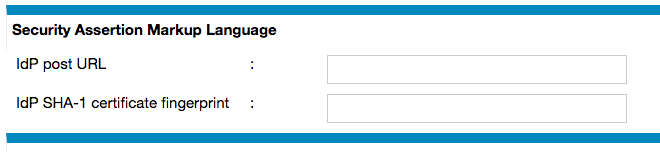
  1. Save your IdP URL and fingerprint in your SP (Noodle)
  2. Use https://yourNoodle.tld/SAML.po in your IdP settings and Web Browser.

Supported IdPs

Onelogin, Okta, and Azure
Note: Contact us for assistance integrating Other IdPs.

Noodle Configuration

In Noodle navigate to “System Tools > Settings > Single Sign-On”

Both URL & fingerprint will be supplied by your IdP vendor. Your IdP may provide an XML file which contains the URL and certificate, to convert the certificate into a SHA-1 fingerprint there are some online SAML tools:

Format Certificate

Calculate Fingerprint

IdP Configuration

Your IdP will require a location to direct SAML responses, use https://yourNoodle.tld/SAML.po.  Noodle will be compatible with the default settings of most IdPs.

OneLogin

  1. Navigate to "Administration > Applications > Add App"
  2. Search for "SAML Test Connector (IdP)"
  3. setting tabs
    • Info (all optional)
    • Configuration
      • ACS (Consumer) URL Validator = .*
      • ACS (Consumer) URL = https://yourNoodle.tld/SAML.po
      • the rest can be left blank
    • Parameters
      • Configured by admin
        • NameID (fka Email) = Email
    • Rules (all optional)
    • SSO
      • X.509 Certificate = 2048-bit
        • View details will show the fingerprint
      • SAML Signature Algorithm = SHA-1
      • SAML 2.0 Endpoint (HTTP)
        • This is the URL to save in Noodle
    • Access (all optional)
    • Users (make sure you add some)
    • Privileges (all optional)

Azure

  1. Azure Active Directory > Enterprise applications > New Application
  2. Non-gallery Application > Name can be anything > 2 Single sign on > SAML
    • set "Identifier (Entity ID)" to the domain name for the Noodle instance
    • set the "Reply URL" to https://yourNoodle.tld/SAML.po
    • copy the "Thumbprint" and "Login URL" to put in the Noodle settings